
Antinutrients: How Lectins, Phytic Acid & Oxalates Quietly Affect Your Gut and Brain
Mar 28, 2026
You eat clean. So why do you still feel foggy, exhausted, or off-balance? The answer might be hiding in your healthiest meals.
You start your morning with a green smoothie. Lunch is a quinoa bowl loaded with spinach and chickpeas. Dinner? Lentils, whole grains, fresh vegetables. And yet — the brain fog lingers. The tiredness won't lift. Your mood swings without warning. This isn't a lack of discipline. It's biology.
There's something rarely discussed in mainstream nutrition — something that matters especially for people who are deeply invested in their health, their mental clarity, and their body's natural rhythms: plants protect themselves. And sometimes, that protection comes at a cost to your wellbeing.
This article is not about fearmongering. It's about understanding. Because when you understand what's happening inside your body, you stop guessing — and start making choices that actually work for you.
What Are Antinutrients? (And Why No One Talks About Them)
Imagine a wild animal is chasing you. Your instinct is to run, fight, or hide. Plants can't do any of that. They're rooted in place, exposed to insects, fungi, and animals — including us.
So over millions of years, they developed something else: chemical defense compounds. These are called antinutrients — natural substances that exist specifically to discourage predators from eating the plant completely.
The important nuance here: this doesn't mean you should stop eating plants. Far from it. But understanding antinutrients gives you a powerful tool — the ability to read your own body's signals and respond with precision rather than guesswork.
The Gut-Brain Axis: Why Your Belly Runs Your Mind
Before diving into the specific compounds, there's a foundational piece you need to understand — one that changes everything:
Your gut and your brain are in constant conversation.
Through the vagus nerve — the longest nerve pathway in your body — signals travel in both directions between your digestive system and your brain. This is called the gut-brain axis, and it means that what happens in your gut doesn't stay in your gut.
When irritants in food trigger micro-inflammation in the gut lining, that inflammation can block nutrient absorption. And when your brain doesn't receive the nutrients it needs, the result shows up in your day-to-day experience: fatigue, irritability, mental cloudiness, a vague sense of inner restlessness.
You feel it — even if you can't name the cause.
The 5 Most Relevant Antinutrients — What They Do, Where They Hide, and What Helps
Antinutrient 01Lectins – When the Gut Wall Comes Under Pressure
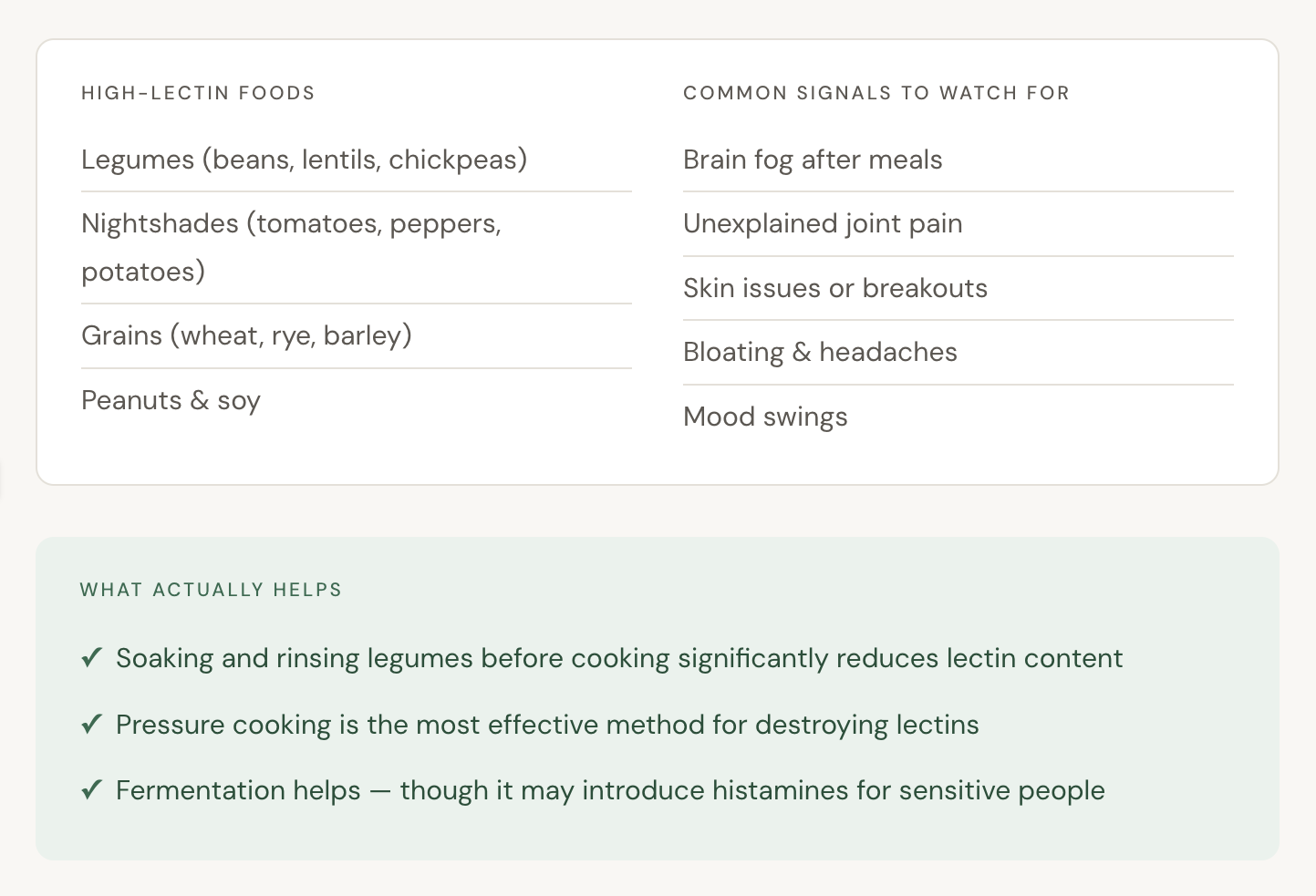
Lectins are proteins found in nearly all plants — but in particularly high concentrations in certain foods. They bind to sugar molecules on the surface of your intestinal cells. For many people, this is entirely manageable. But for sensitive systems, lectins can interfere with the gut lining's natural ability to repair itself after normal stress.
Over time, this can lead to small gaps in the intestinal wall — a condition known as increased intestinal permeability, or "leaky gut." Through these gaps, substances enter the bloodstream that don't belong there, triggering a cascade of low-level immune responses.
Phytic Acid – The Mineral Thief
You take a zinc supplement. You eat plenty of leafy greens and spinach. So why do your bloodwork results still show deficiencies?
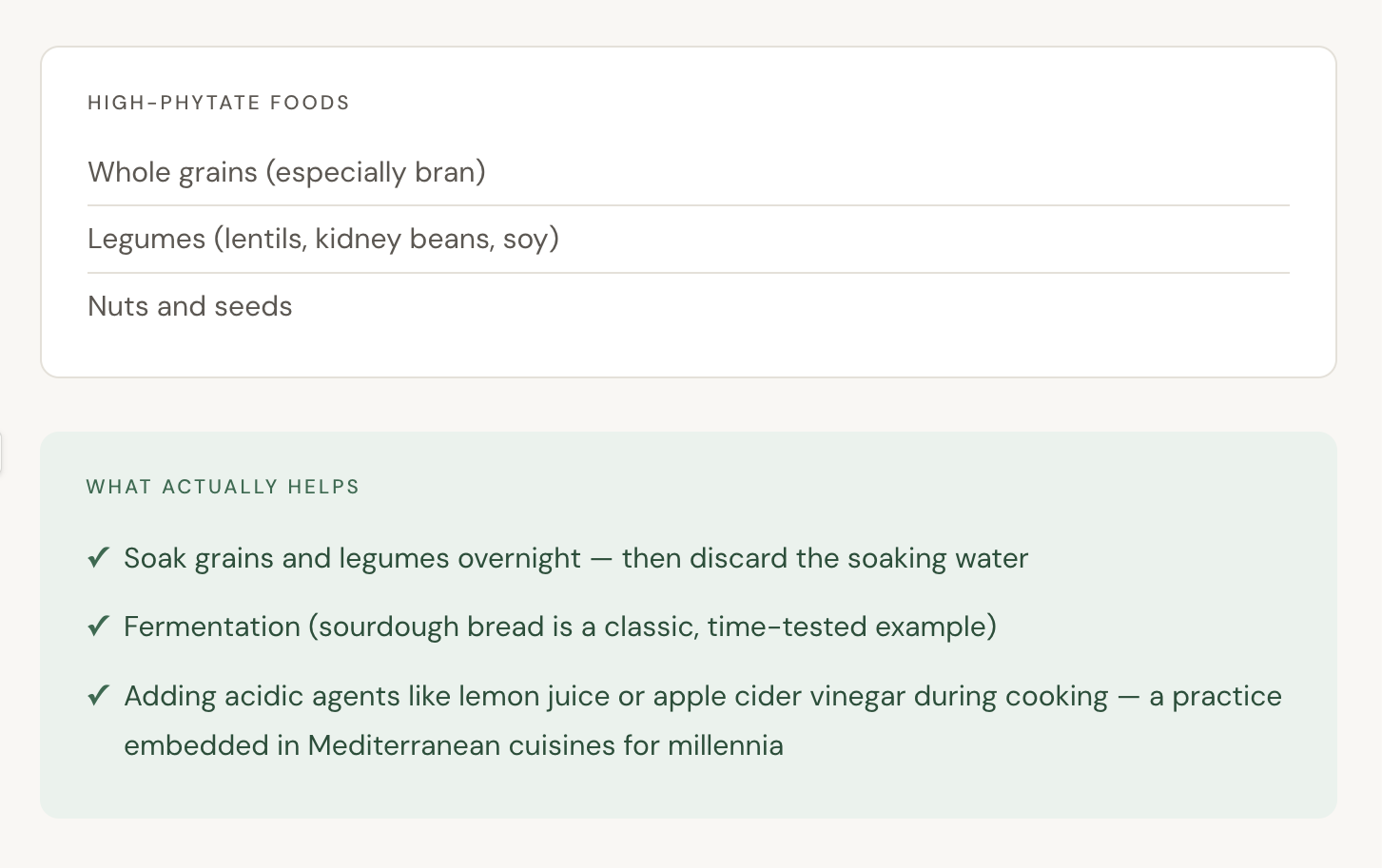
Meet phytic acid — or phytate. It binds to essential minerals like zinc, magnesium, calcium, and iron before your body has a chance to absorb them. Bound to phytate, these minerals pass through your system and are excreted without ever crossing into your bloodstream. The nutrients were there — they just never arrived.
Beyond mineral binding, phytic acid also inhibits digestive enzymes like pepsin and amylase — the very enzymes responsible for breaking down proteins and carbohydrates. Less enzymatic activity means poorer digestion, and more fermentation and putrefaction in the gut.
Antinutrient 03
Oxalates – Why Your Morning Smoothie Might Be Working Against You
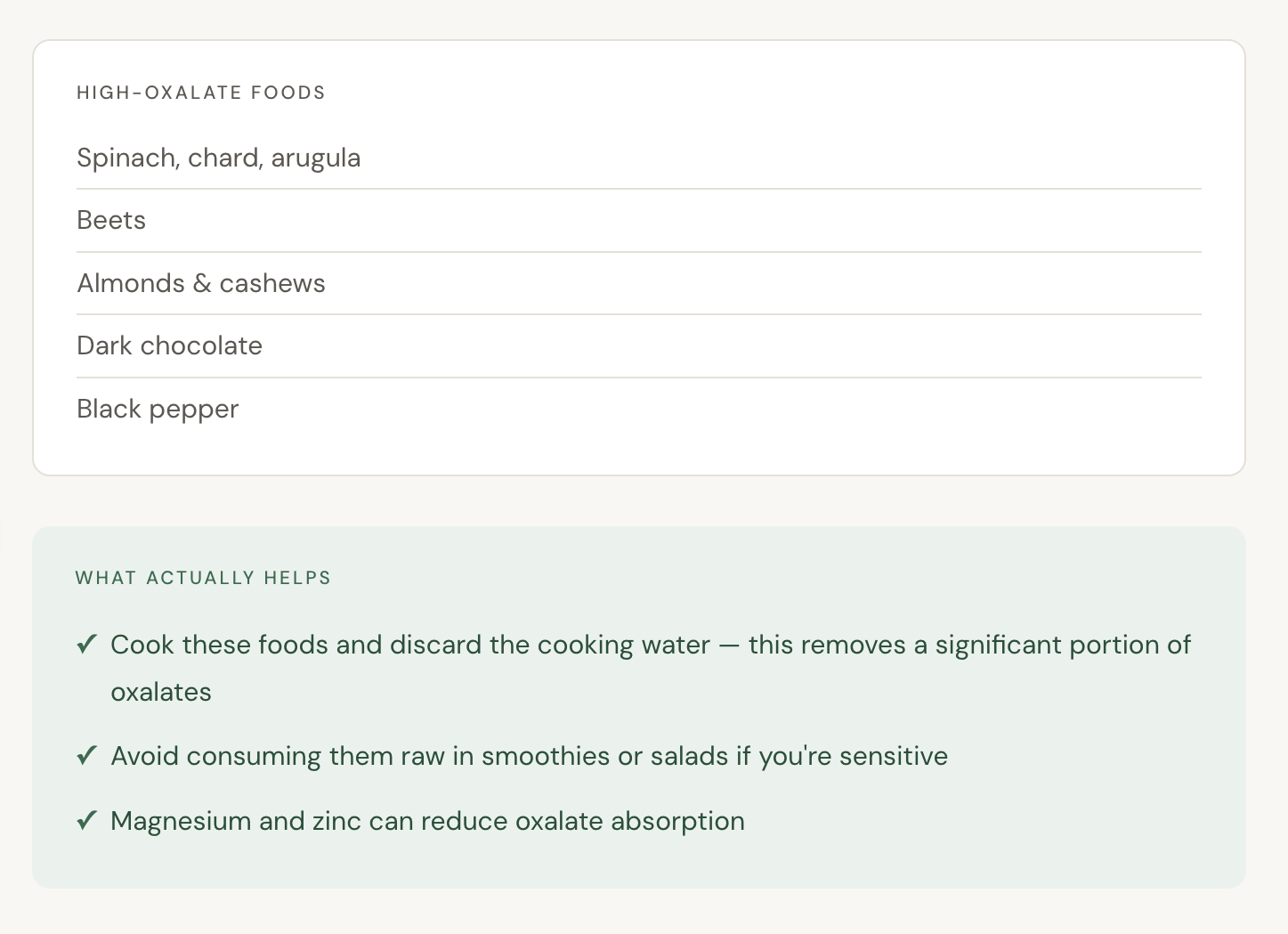
Raw spinach, kale, almonds, almond butter, beets — these sound like the ingredients of a perfect, health-optimizing morning. But here's what's actually happening in your body:
Oxalates bind to calcium in the gut and form tiny, sharp-edged crystals. These crystals can deposit in soft tissue and, over time, contribute to kidney stones. For more sensitive individuals, even moderate oxalate intake can cause a burning sensation in the eyes, mouth, or throat — and chronic stress tends to amplify this sensitivity significantly.
The problem with green smoothies is concentration. You're blending large quantities of raw, high-oxalate foods into a single drink — far more than you'd consume in a cooked meal, without the protective effect of heat or water-based cooking to reduce oxalate content.
Antinutrient 04
Gluten – More Than a Trend
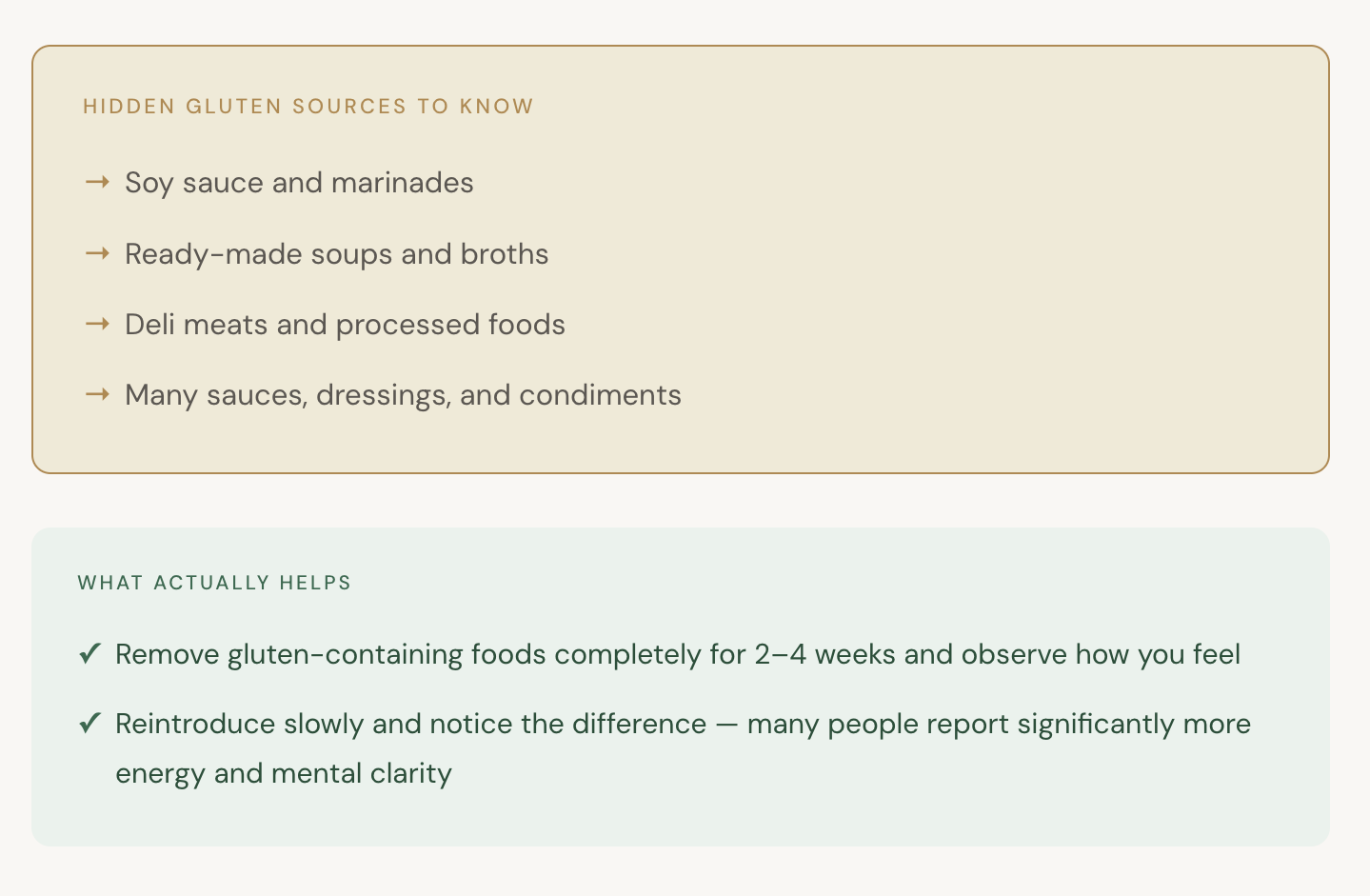
Gluten has become a cultural punchline — but the science is clear: no human can fully digest gluten proteins. Derived from wheat, rye, and barley, these proteins pass through the digestive tract only partially broken down, which can trigger immune responses across a wide spectrum — from full celiac disease to non-celiac gluten sensitivity, which is far more common and frequently goes undetected.
What makes gluten particularly interesting from a neuroscience perspective: during digestion, gluten breaks down into opioid-like compounds called gluteomorphins, which bind to the same receptors as opiates. This is why bread, pasta, and cookies feel genuinely comforting — they activate your brain's reward circuitry.
At the same time, they can promote systemic inflammation that extends into the brain itself.
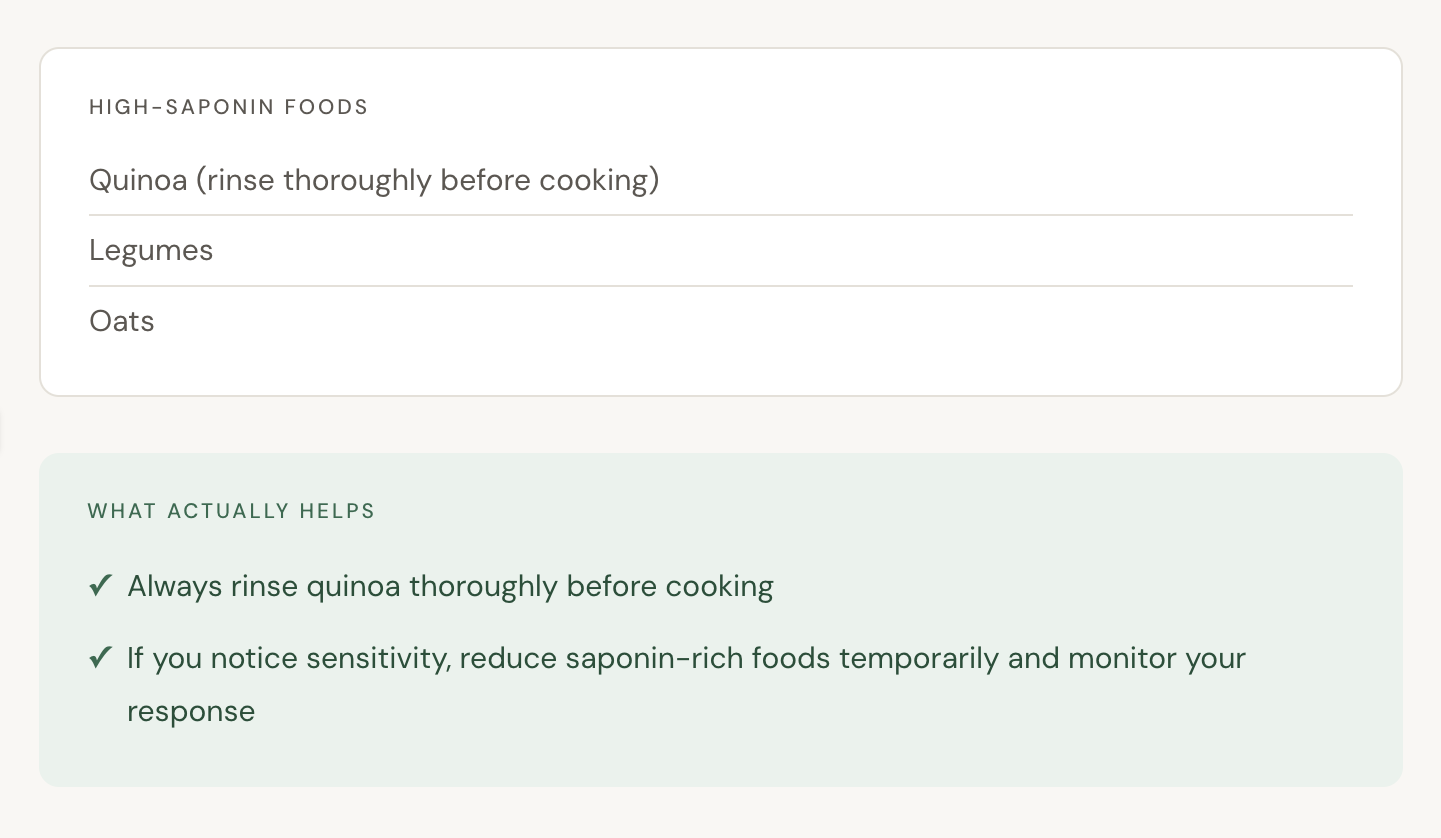
Saponins – The Silent Irritant
Saponins derive their name from the Latin word for soap — and they function similarly in the body. They can disrupt cell membranes and weaken the gut barrier, which makes it easier for other antinutrients to permeate the intestinal lining.
You'll find them in foods widely regarded as superfoods — which is part of what makes them easy to overlook. If you've ever been told to rinse quinoa before cooking, this is exactly why.
What Your Body Actually Needs — Beyond Generic Rules
Here's the truth that most nutritional advice ignores:
Your body is not the same as your friend's body. What works brilliantly for someone else may quietly knock you out of balance. That's not a weakness. That's biology being exactly as individual as it should be.
A well-regulated, low-stress system can compensate for a great deal. A chronically overloaded system — running on insufficient sleep, too much pressure, too little true recovery — simply cannot.
So the question isn't: "Is spinach healthy?"
The real question is: "Is spinach good for me — right now, in this season of my life?"
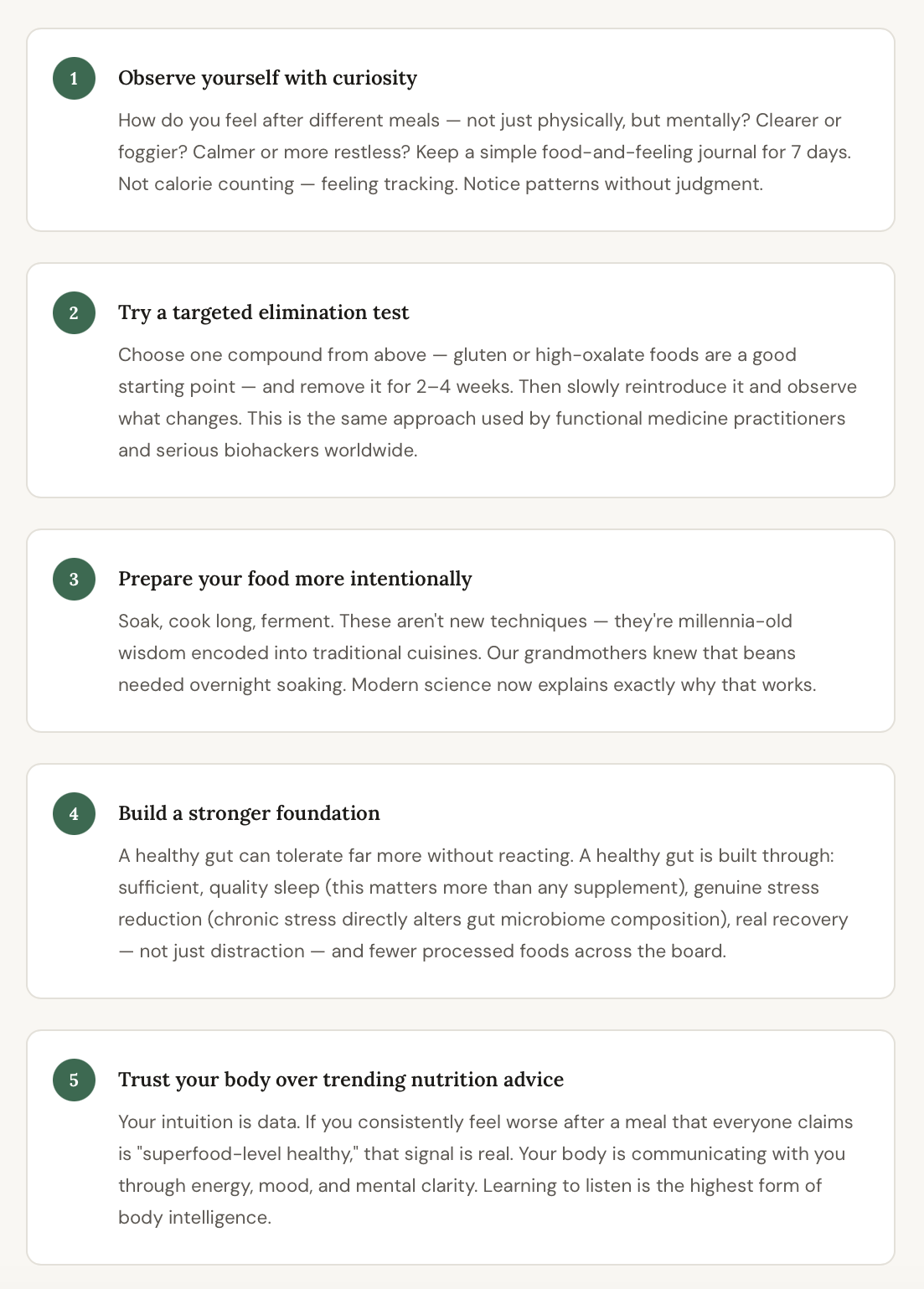
Your Natural Biohacking Protocol: 5 Practical Steps
This is not about radical elimination or detox culture. It's about building awareness — the most powerful biohacking tool that exists.
The Core Takeaway
The goal of this article was never to create fear around food.
It was to give you a new lens — one that helps you understand why certain foods, despite their glowing reputation, might produce unexpected reactions in your particular body.
Your body speaks to you constantly — through energy levels, mood, clarity, and the absence of these things. Natural biohacking means learning to listen to those signals. And then choosing, consciously, what fits you in this moment.
Not because someone told you it's healthy. Because it genuinely feels right — for you, right now. That's real self-efficacy. That's the path back to your own naturalness.
Want more clarity on your body and mind?
Get practical, science-backed insights delivered to your inbox — designed for intelligent people who want to understand themselves more deeply. Join the Newsletter →
Frequently Asked Questions
Antinutrients are natural compounds that plants produce as a defense mechanism. In sensitive individuals, they can interfere with the absorption of key minerals or irritate the gut lining — often without any obvious symptoms to pinpoint.
No. For most people, the answer isn't total avoidance — it's smarter preparation. What matters is your individual tolerance, which depends on the current state of your gut, your stress levels, and your overall sensitivity.
The most commonly discussed are lectins, phytic acid (phytates), oxalates, gluten, and saponins. Which of these are relevant to you depends on your gut health, stress load, and individual food sensitivities.
They can contribute indirectly — particularly when they burden the gut, promote low-level inflammation, or block nutrient absorption. This can manifest as fatigue, irritability, restlessness, or the classic feeling of thinking through fog.
The most effective methods are soaking, thorough cooking (a pressure cooker is particularly effective for legumes), fermentation, and discarding cooking water. These techniques can dramatically reduce antinutrient load without eliminating the foods entirely.
For oxalate-sensitive individuals, raw and concentrated — especially in smoothie form — can deliver a significant oxalate load. Many people tolerate cooked leafy greens far better than their raw, blended counterparts.
A 7-day food and symptom log, followed by a 2–4 week elimination test of a suspected trigger, then slow reintroduction. This process is simple, free, and one of the most powerful self-knowledge tools available to you.
Author